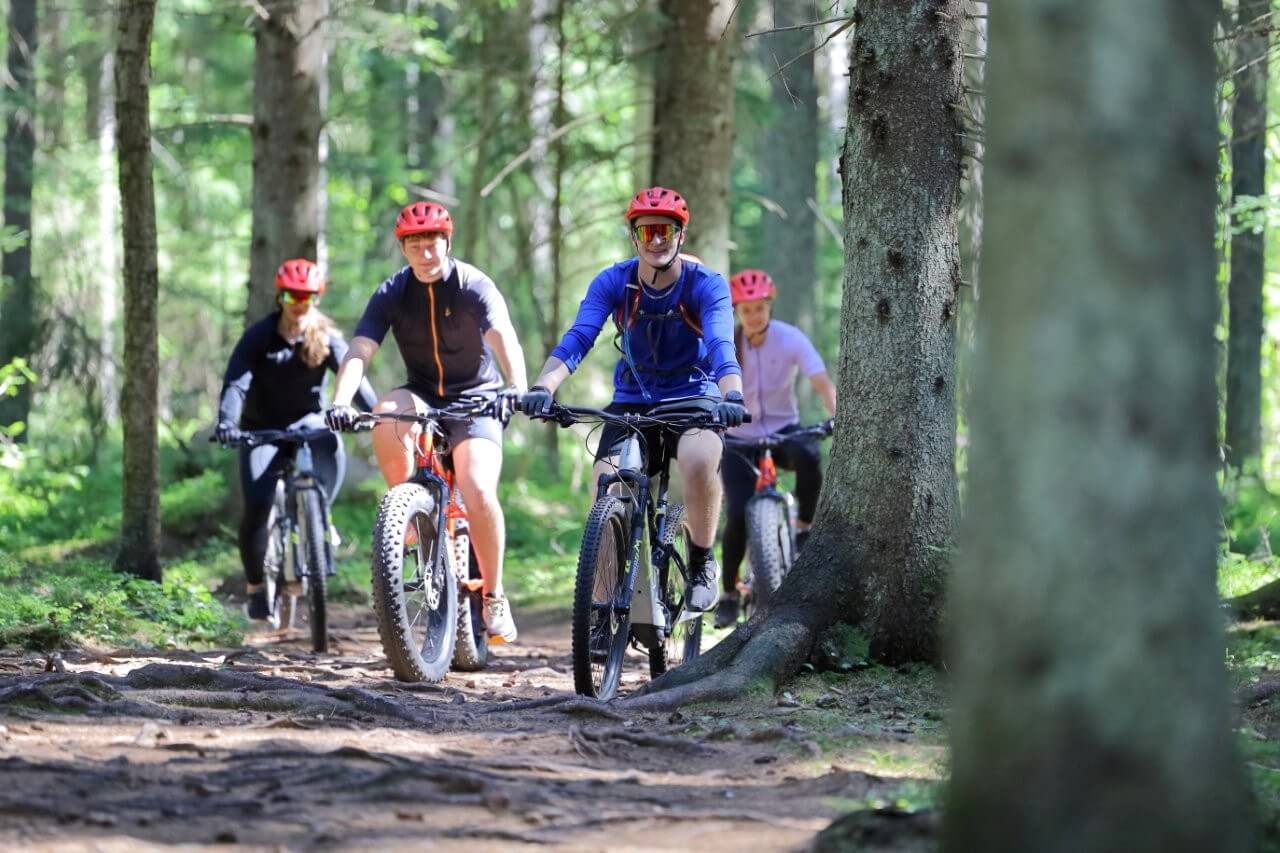
Maastopyöräilijoitä Helsingin Paloheinässä.

Trails for Change

By blending theory with action, Trails for Change proves that high-impact outdoor recreation and nature conservation are not mutually exclusive. This project sets a new standard for European sports governance, ensuring that the trails we use today remain resilient and accessible for the generations of tomorrow.

Trails for Change is a forward-thinking European initiative designed to transform outdoor sports into a driver for environmental and social change. Operating under the ERASMUS-SPORT framework, the project officially launched on 1 December 2025 for a 30-month journey. Led by Suomen Latu – The Finnish Outdoor Association, the project unites a diverse consortium from eight countries to move beyond identifying challenges toward implementing scalable, real-world solutions.

The Concept: An Opportunity-Driven Approach

The core concept of Trails for Change is rooted in maximizing opportunities. Rather than merely reacting to environmental pressures, the project equips sports organizations, national parks, and policymakers with the tools to proactively integrate sustainability into their DNA. By focusing on mountain biking, hiking, and trail running, the project establishes a standardized European framework for responsible trail governance and eco-conscious event planning.

Methodology: The Four-Phase Lifecycle

The project employs a structured, four-phase methodology that ensures evidence-based policy development and practical application:

  • Phase 1: Foundations & Knowledge Exchange: Establishing governance structures and aligning regional best practices. This phase builds the bridge between sports organizations and conservation groups.
  • Phase 2: Capacity Building & Knowledge Transfer: Empowering stakeholders through interactive, peer-learning experiences tailored to local environmental and regulatory realities.
  • Phase 3: Real-World Implementation: Piloting sustainability models through eight live outdoor sports events, allowing for the testing and refinement of eco-friendly practices.
  • Phase 4: Advocacy & Long-Term Integration: Leveraging digital storytelling and policy advocacy to institutionalize sustainability principles within European sports governance.

Innovative Training: The “Train the Trainers” (ToT) Model

At the heart of the project’s methodology is a blended learning approach inspired by Kolb’s Experiential Learning Cycle. By combining theoretical online modules with hands-on field sessions, the project ensures that knowledge is not just heard, but practiced.

The training curriculum features five specialized modules:

  1. Trail Management: Focusing on accessibility and safe, user-friendly strategies.
  2. Trail Building: Technical expertise in erosion control and resilient construction.
  3. Trail Classification: Developing consistent, international safety and difficulty ratings.
  4. Trail Conservation & Maintenance: Techniques for protecting ecosystems and enhancing trail durability.
  5. Sustainable Event Planning: Guidelines for waste reduction and carbon-neutral logistics.

The Kick-Off ToT empowers staff from partner organizations to become “multipliers.” Experts from IMBA Europe, Mountain Bike Schladming, and the National Parks of Tara and Shar Mountain (among others) lead these sessions, ensuring a high-quality, standardized rollout across all participating countries.

Scaling Impact and Legacy

Trails for Change is designed for scalability. By training over 80 professionals and engaging more than 480 athletes and organizers, the project ensures that sustainability becomes “second nature” in the outdoor sports sector.

The project’s legacy will be cemented through:

  • The Open Educational Resource (OER) Hub: A digital platform hosting all training materials and success stories.
  • Digital Storytelling: A campaign reaching over 160 organizations through the extensive networks of IMBA, ENOS, and Connect International.
  • Policy Change: At least nine major organizations across eight countries will formally adopt the new sustainability frameworks by May 2028.
Back to top